TL;DR Quick Summary
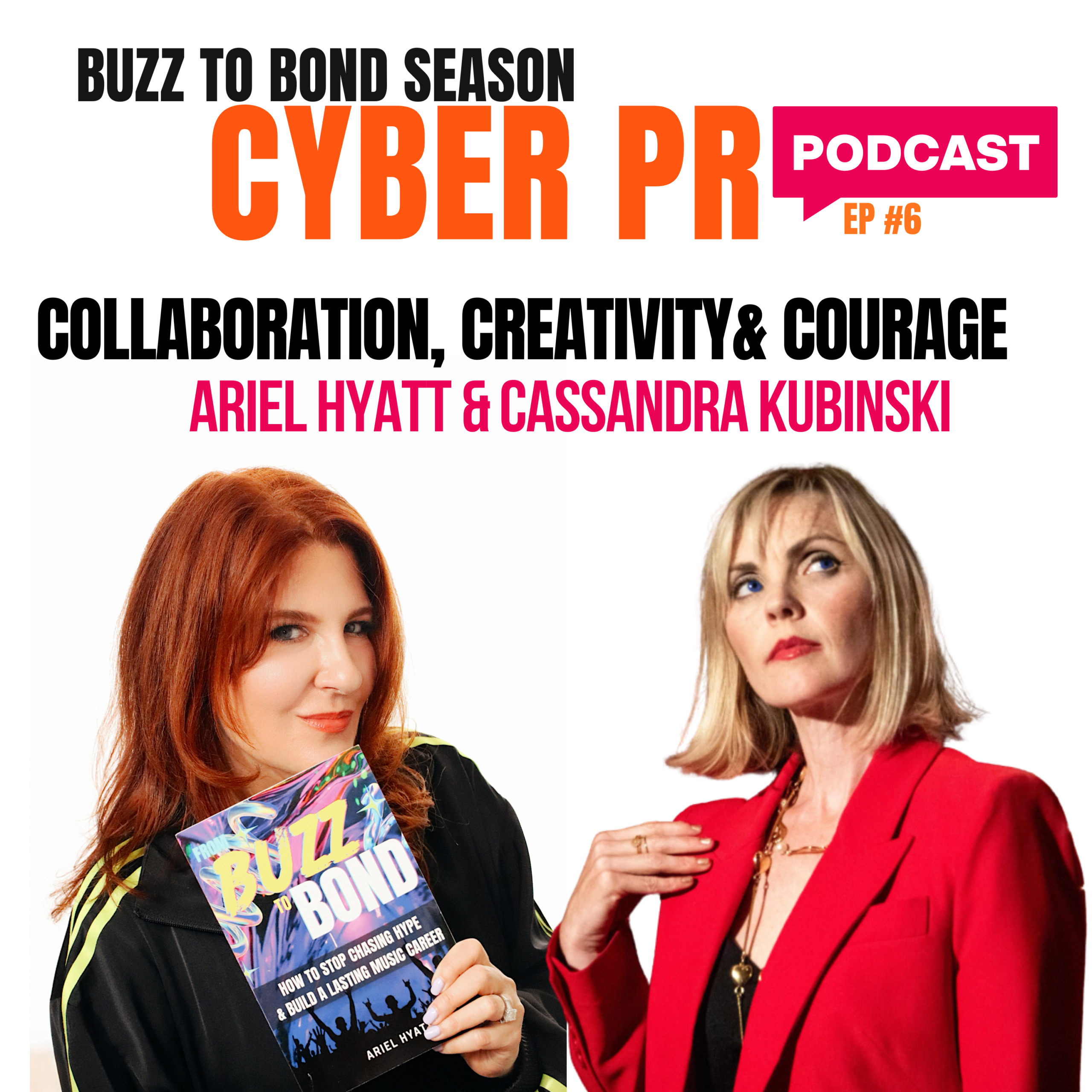
If you want to build a music career that actually lasts, stop chasing the metrics that were never yours. Cassandra Kubinski joins me to break down what it really takes: collaboration, brand clarity, and repeatable strategies. Not follower counts.
Why do I feel stuck as an independent artist?
This episode will help you get unstuck.
Cassandra Kubinski is one of my favorite artists to talk to about building a music career that lasts. Singer-songwriter, artist coach, participant in my Buzz to Bond Mastermind. She’s worked with the Goo Goo Dolls, collaborated with Billy Joel, placed songs on Lifetime’s Dance Moms, and built a decades-long independent career entirely on her own terms. She is the real deal, and in this episode, she holds nothing back.
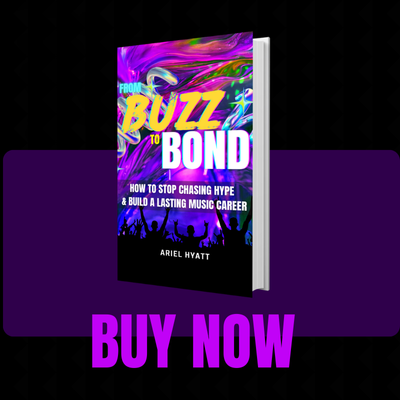
This conversation ties right back into the Bond Marketing Funnel—the 9-step framework at the heart of my book From Buzz to Bond and my 7-Week Mastermind. If you’re new to the framework, hang tight. This is going to completely change how you look at your marketing strategy.
“The reason I write songs and make music is to move from fear to freedom. If I can give someone even one millisecond of that sensation of openness and freedom, that’s what I hope people get from listening.”
Cassandra Kubinski
“I talk to independent artists every single day. Most of them are working incredibly hard. Most of them are also pointed in the wrong direction.”
Ariel Hyatt
How wasted energy shows up in real life
I see this constantly. Artists working incredibly hard and spinning their wheels. Not because they’re lazy. Because they’re pointed in the wrong direction entirely.
Cassandra named two patterns that quietly drain every ounce of energy out of a music career.
Pattern 1: Comparison
You get on social media and immediately start measuring yourself against every other artist in your feed. Half those numbers aren’t even real. Likes, follows, view counts: it’s a race with no finish line and a scoreboard that’s rigged.
Pattern 2: Trend-chasing
A colleague blows up on a platform or plays a certain venue, and suddenly you think, I should be doing that too. Should you? Really?
There are thousands of venues in the world. Most of them are wrong for your audience, your energy, and the actual community you’re trying to build. Not every stage is your stage.
The fix
Build your why before you build your to-do list. Ask yourself:
- What outcomes do I actually want from my music career?
- Who are the people I genuinely want to reach?
- How do I want to feel when I’m performing?
- What does a sustainable career look like for me specifically?
Those four questions narrow the field fast. No algorithm can do that for you.
| Energy drain | What it looks like | What to do instead |
|---|---|---|
| Comparison | Checking stats, measuring against other artists | Define your own vision of success first |
| Trend-chasing | Playing venues or platforms because others are | Filter every opportunity by audience fit and personal energy |
| Complaining | Getting wrapped up in industry anxiety | Redirect the conversation to what’s actually working |
One more thing Cassandra said that I want you to sit with. She’s made a choice to hear what other people are anxious about, the AI conversation, the streaming economics debate, without making it her drama. “Getting whipped up into what’s wrong will stop your creativity,” she told me. “For sure.”
Don’t let other people’s fear become your fuel.
Why collaboration changes everything for musicians
At a certain point, Cassandra stopped treating her career like a solo mission. She started actively looking for partners: other artists, brands, nonprofits, causes she genuinely cared about.
The result? More fun, sure. But also: the same to-do list that used to feel crushing stopped feeling heavy. “I didn’t feel like I was doing it just for me,” she told me. “I felt like I was doing it for an us.”
I watch this shift happen with my own clients constantly. Carrying an entire career on your own back is exhausting. Collaboration doesn’t just make the work lighter. It makes the whole thing sustainable.
But here’s Cassandra’s one rule: the right partner is never someone you have to drag. It’s someone who sees something real in it for themselves, for their own reasons, and shows up because of it. If you’re the only one who cares, that’s not a partnership. That’s a favor, and favors run out.
What to look for in a collaborator:
- They bring energy to the project, not just agreement
- They have something to gain, for their own reasons
- You’re not chasing them down to keep things moving
- Their audience or skills genuinely complement yours
You don’t need a permanent team for this to work. Teams can be project-specific. The people you work with on one release might be completely different from the next. What stays consistent is your approach.
Case in point, straight from Cassandra’s own catalog: she collaborated with Americana artist Sawyer Fredericks on her song “Burn It Down,” then separately rerecorded acoustic versions of her Dance Moms placements with Abby Lee Miller. Two artists who could not be more different. One emotional core connecting all of it.
How to finally clarify your musician brand pillars
I was talking to Cassandra in the Mastermind about brand pillars, the foundation of Step 1 in the Bond Marketing Funnel, and she stopped me cold: “I have always struggled with brand pillars.”
I was genuinely shocked. If you know Cassandra, her identity as an artist is crystal clear.
Here’s what came out of that conversation, and I want you to hear it, because it might unlock something for you too.
Her brand pillars were already there. Already operating. She just never put language around them. People outside of her could name them instantly: music for causes, fiery power, collaboration, partnerships. She was living them without being able to say them out loud.
Sound familiar?
Most artists I work with are exactly the same. The identity is already there. Overthinking is the obstacle. Not a lack of clarity.
A few things to remember about brand pillars:
- They’re not a cage. They’re a starting point.
- You’re allowed to change your mind as you grow.
- Fans are listening to singles now, not albums. Flexibility is an asset.
- What holds it all together is your emotional core, not a fixed formula.
If you’ve been putting off this exercise, stop dodging it. Step through it, get out of your own head, and get it down. That’s the exact work we tackle together inside the Mastermind.
Repeatable strategies that grow your music fan base
Sustainable careers are not built on one-off moments of visibility. They’re built on systems that compound. Most artists I work with have zero of these systems in place. I see it constantly: someone shows up strong for a week, disappears for a month, and wonders why nothing’s growing.
Here are the repeatable strategies Cassandra’s actually built into her career.
Strategy 1: Put it in the calendar
If it’s not in the calendar, it doesn’t exist. Full stop.
Cassandra has a standing Tuesday block: “Add value to your Patreons.” Does she hit it every single Tuesday? No. But she’s committed to showing up on her Patreon once or twice a month, and that calendar block is what keeps the promise real.
Every phone has a repeat-forever function. Use it. Set it and don’t delete it.
Strategy 2: Make collaboration an ongoing workflow
Not a one-time experiment, an ongoing habit. Cassandra actively looks for online collabs that are entertaining, inspiring, and educational, and she treats finding them as a regular part of the job, not a special occasion.
Strategy 3: Show up consistently for your fans
Fans cannot build a relationship with an artist who disappears. Showing up once or twice and going quiet doesn’t build relevance. It erodes it.
What consistency actually looks like:
- A monthly email to your list, even a short one
- A standing social media check-in your fans can count on
- Patreon or fan community updates on a predictable schedule
- Following through on what you said you’d do
Consistency is not glamorous. It is the actual mechanism that turns casual listeners into people who show up for you.
Do your homework here. This is not optional if you want a real career.
How buzz marketing pulls you away from your true north
Let me be direct, because I’ve watched this derail careers that had real potential.
Buzz marketing feeds the ego in a way that feels productive. Ads, follower counts, stream numbers, the daily hit of checking your metrics. It isn’t productive. It just feels like it.
Cassandra said it better than I ever could: “You can buy Facebook ads, you can see how many likes and follows you got, and you can wake up every day like an addict and check your phone for signals.”
Sound like anyone you know? I thought so.
Here’s the practical problem nobody talks about. People can tell. If Cassandra’s looking at a potential collaborator and sees ten thousand YouTube views with two comments, she knows those aren’t real. Inflated numbers don’t build trust. They build skepticism in exactly the people you’re trying to impress.
And here’s the part I want you to really sit with: “The feeling of having three real fans versus 300 likes from bots or inactive accounts, it’s not fulfilling on a human level. Nothing replaces real human connection.”
Three real fans. Write that down.
That’s what we’re building here. Not numbers. Not buzz. Real bonds. That’s how you build a music career that actually lasts.
Key takeaways
- Wasted energy almost always comes from comparison and trend-chasing. Stop measuring your career against someone else’s highlight reel and start building toward your own.
- The biggest shift in Cassandra’s career was going from solo effort to intentional partnership. The right collaborator shows up motivated for their own reasons. You shouldn’t have to drag anyone.
- Your brand pillars are probably already operating. You just haven’t named them yet. Overthinking is the obstacle, not a lack of clarity.
- Repeatable strategies, calendar blocks, consistent fan communication, ongoing collaboration, are what separate artists who actually grow from artists who work hard and stay stuck.
About the guest
Cassandra Kubinski is a singer-songwriter, artist coach, and independent artist who’s built a decades-long career entirely on her own terms. Her collaborations include the Goo Goo Dolls and Billy Joel, and her songs have been placed on Lifetime’s Dance Moms. She’s a participant in the Buzz to Bond Mastermind.
Official website: https://www.cassandrakubinski.com/
Instagram: https://www.instagram.com/cassandrakubinski/
YouTube: https://www.youtube.com/channel/UC8305nkWBPYV_ZwCFxYnGmw
Spotify: https://open.spotify.com/artist/0D7wTeWu9ppxwRL5HGVgxq
Resources mentioned
- From Buzz to Bond by Ariel Hyatt
- Buzz to Bond 7-Week Mastermind
- Free Buzz to Bond Webinar
- Brand pillars for musicians
If this hit home, the next step is simple. Come get inside the framework behind it. Watch the free Buzz to Bond webinar.
Listen and subscribe
| Platform | Link |
|---|---|
| Apple Podcasts | podcasts.apple.com/podcast/id1462931317 |
| Spotify | open.spotify.com/show/32BD52RAz9auVRc5NK1D3e |
| YouTube | youtube.com/channel/UCW4j-eMBG7OKfGX9zicSWjw |
Visit the Cyber PR Music Podcast for a full list of episodes.
Frequently Asked Questions
Why do I feel stuck even when I’m working hard?
Because you’re measuring progress with platform metrics that were never yours to begin with. Streams and followers belong to tech companies. Without a clear picture of what a sustainable career looks like for YOU, specifically, you default to chasing whatever everyone else is doing. That’s exhausting work that goes nowhere.
What makes a music collaboration actually work?
Both people are genuinely in it for their own reasons. The clearest sign you’ve found the right person: you’re not dragging them. They show up motivated because they see something real in it for themselves, too. Because they also want to build a music career.
Why do so many artists struggle to define their brand pillars?
Because they’re already living them, they just haven’t put language on it yet. Other people can usually see your identity more clearly than you can. Stop waiting for it to feel perfect. Name what you’re already doing and go from there.
What is buzz marketing, and why is it a problem for musicians?
Buzz marketing chases vanity metrics, streams, likes, follower counts, and paid reach, instead of real fan relationships. It feels productive. It isn’t. The numbers are often fake, the people who matter most can tell, and you’re left checking your phone like an addict with nothing real to show for it.
What is a repeatable strategy, and why does it matter?
A repeatable strategy is a consistent action, a calendar block, a monthly email, a regular collab, that compounds over time into real fan relationships. Nobody becomes a real fan from one post. They become a fan from showing up reliably over months and years. If it’s not in your calendar, it’s not happening.
What does “true north” mean for a music career?
It’s the internal reason you make music in the first place, who you actually want to reach, and what impact you want to have. It’s the compass that tells you which opportunities are yours and which ones belong to someone else’s path. Cassandra’s is simple: move people from fear to freedom. Everything she does connects back to that. That is how she has built her music career.
How do you build a music team without a big budget?
Think project by project, not permanent. Build a team for one release, one campaign, one collaboration. Lead with what you actually bring, your drive, your vision, your reach, and be clear about what you want back. People say yes more often than you’d think when the ask is specific and real.
What’s the biggest takeaway from this conversation?
Three real fans beat 300 fake likes, every time. Your brand pillars are probably already there; you just haven’t named them. And the shift from “I’m doing this alone” to “I’m doing this with an us” changes everything. Not just your results. The whole experience of building a career.
Want to see my whole system in action? Watch the webinar now – Instant replay!
[ + ] Click Here to Read the Full Episode Transcript
CYBER PR MUSIC PODCAST Season 3 Episode 6: Cassandra Kubinski
ARIEL: Welcome to the Cyber PR Music Podcast. I am Ariel Hyatt, and this is Cassandra Kubinski, one of my favorite musicians in the world. This woman gets it done. You are one of the rare artists who has both the left brain and the right brain fully connected. What I admire so much about you is that you are here, you are not going anywhere, you have had a long career, and you have a long career ahead of you. I love the way you think.
CASSANDRA: Thank you. It’s an absolute joy to be here.
ARIEL: Cassandra is partaking in my current Buzz to Bond Mastermind, which is a seven-week intensive where we really dig in.
CASSANDRA: What’s so interesting about it is that the way it’s broken down gives you, as an artist, an opportunity to not get overwhelmed. As an artist, a songwriter, and a human, one of the reasons we don’t do a lot of things is because we look at the entirety of the process and say, “That’s too much, I can’t.” You break it down so that the pieces feel manageable. That’s golden, especially for music marketing with capital M’s. It can feel like a lot.
ARIEL: Thank you. Before we go further, can you give us an introduction?
CASSANDRA: Sure. I grew up in Enfield, Connecticut, and got into musical theater as a preteen. I ended up in a professional production of Annie, and the course was set. I was in the entertainment business.
When I went to college, I had this vision of myself on a stage playing a grand piano with lights coming through the fog, and I decided I wanted to be a singer-songwriter. The people who were really big at the time were Nora Jones, Vanessa Carlton, John Mayer, and Gavin DeGraw. I felt drawn to that community because they were writing their own music and saying things about life in interesting ways.
Everything since then has come out of having the boldness to move to New York City as a singer-songwriter. I’ve had exciting moments along the way, like working with the Goo Goo Dolls at my very first concert. Then at some point, I got to collaborate with them on an autism advocacy song I wrote. I got to meet my hero, Billy Joel, who was probably my biggest inspiration as a songwriter, and create some things with him. It’s been a whole mix of singer-songwriter work, voice acting, stage acting, artist advocacy, and working as an artist coach helping artists level up. It’s been a good ride so far.
ARIEL: One thing that has really struck me about the way you speak about yourself as an artist is that you have an overarching vision of what your music stands for. Can you share that?
CASSANDRA: It took some time to get here. What I say now, what I see and what I feel, is that the reason I write songs and make music is to move from fear to freedom. That’s what I hope my songs are tools for. We’re all in whatever space we’re in, maybe holding ourselves back, maybe a little stuck. If I can give someone even one millisecond of that sensation of openness and freedom, that’s really what music and songwriting has given me and what I hope people get from listening.
ARIEL: I love that as your true north. Now I’d like to talk about wasted energy. I see a lot of it happening now, partly because social media tools are so addictive. You go to simply post about a new show and an hour and a half later you’re somehow watching cat videos or doom scrolling into some very unpleasant place. You said something powerful before we started recording. You said artists waste energy trying to do what everyone else is doing. What does that look like in real life?
CASSANDRA: I’ll call myself out on this as much as I see it in the artist community. Number one: comparison. You get on social media or the internet and you sit there thinking, “Oh my God, I’m not doing that and I should be doing that.” Looking at stats is a killer, because half of them aren’t even real. Within our human psychology, we look and we go, “How am I doing compared to how they’re doing?” Likes, follows, comments, all of it.
The other way this shows up is chasing trends or doing what other people are doing. You see someone played a certain venue and think, “I’ve got to get a gig there.” The antidote, what I’ve learned, is that before you create a to-do list, you create the why. You create your own vision of what would actually light you up.
Let’s take performance as an example. How many venues are there around the world? A lot. You are not going to, nor should you, play all of them. The ones you personally should play derive from asking: what are your outcomes? Who are the people you want to reach? How do you want to feel when you’re performing? How do you want your audience to feel? Maybe that narrows the field down so that when you see a colleague playing that hot club downtown, you realize, “Actually, that’s not a match for my energy or the community I want to build.”
ARIEL: So how do you personally filter out the crazy-making instead of getting caught up in it?
CASSANDRA: The main thing is building the ability to listen to what other people are getting wrapped up in without making it my drama. And sometimes it means having the self-respect to build some boundaries. Complaining is just such draining energy. If you’re trying to be creative and expansive, complaining about anything is going to drain that. Take the AI discussion. A lot of artists have anxiety, fear, and anger in that space right now. It’s a real balance, being compassionate and mindful of people’s emotions while not allowing myself to get wrapped up in their energy.
The answer is: you choose to intentionally create a conversation for what’s right instead of for what’s wrong. Getting whipped up into what’s wrong will stop your creativity. For sure.
ARIEL: When we were preparing to talk, you mentioned something I know about you but was glad you acknowledged, which is that you had a shift moment in your career where you realized partnerships changed everything. What was that moment and how did it come about?
CASSANDRA: Phase one of my career: I was in New York for five years, then I moved to Nashville, there was drama, and then I moved back to New York City six years after the first time. It was a whole new ball game. The things I had thought were going to happen for me had happened in various ways, but not in the ways I envisioned.
At a certain point, I took a step back and realized: I’ve created a lot, I’ve accomplished a lot, but why am I not having any fun? Why is this so stressful all the time? So I started to consider what if I took my creative ideas and started actively looking to invest energy in partnering. That meant partnerships with artists, brands, nonprofits, and causes.
What I discovered was that it became more fun. There was a positive feedback loop from working with someone else or a whole team. And all of that to-do list stuff you have to do as an independent artist, it just didn’t feel as heavy. I was doing the same work. The feeling around it was different. I didn’t feel like I was doing it just for me. I felt like I was doing it for an “us.”
And one of the keys to a great partnership is that you have a partner on the other side who is truly just as excited as you, just as invested. It doesn’t have to be for the same reasons, but they really see something in this for themselves, so they’re motivated. You don’t have to drag them.
ARIEL: I find that so many times in band situations, there’s one person doing all the work and they’re exhausted.
CASSANDRA: It may also be that they’ve never had a conversation about: if this works, if we succeed at this, what is in it for you? You have to inquire about that for yourself and for your partners. You have to discover that so you’re motivated by the why.
ARIEL: If you’re an independent artist, how do you build a team, especially when you feel like you don’t have an endless supply of money to pay people?
CASSANDRA: For me, inside of partnerships, teams are sometimes more per project. I end up with the people I’m working with on this release with this artist, and then a different team for the next release with the next brand or personality.
You build with courage and with compassion for yourself as much as for other people. You build focused on the value that you bring, as well as what you want to get out of it. What do you have to offer? I’m super motivated, I’m driven, I bring a lot of organization. How do I make this an easy win for them? People don’t always say yes, but I started getting more yeses once I started approaching it that way.
ARIEL: Let’s talk about identity and brand, which is an area we’ve worked on together. A few weeks ago, you said something that surprised me. I was talking about the Buzz to Bond course, specifically about the foundation of the Bond Marketing Funnel, which starts with fan personas, and before that, brand identity. Brand pillars. You looked at me and said, “I have always struggled with brand pillars,” which shocked me, because I always think of you as an artist with a really clear sense of your brand. Why do you struggle with that specifically?
CASSANDRA: One reason is that coming from the acting world and theater world, you play a lot of roles. I’ve never had to be one character. The other reason, and you actually reflected this to me which was super valuable, is that you said, “I think you do know and you’re just way overthinking it.” As much as I wanted to brush that off, I realized: why does everybody tell me that? Maybe there’s real truth in it. I really am overthinking it.
For me, my brand pillars, the space I occupy and the way I present myself, may be so automatic that I just never put language around it. And yet I’ve shown up in these ways over time, and people outside of me could say, “Oh, her brand pillars are music for causes, fiery power, collaboration, and partnerships.” And I’d be like, “Oh, I guess they really are.”
The process you offer in Buzz to Bond helps clarify and simplify it. You walk right through it and think, “Okay, I’m getting out of my own head. I don’t have to figure this out myself.”
ARIEL: I think something important to note is that once you verbalize a brand pillar or decide “this is what I am right now,” you can always change your mind. And that’s something I really love about releasing music now. When I started 30 years ago, you had to be extremely narrow. I had a band I loved in Boulder, Colorado with three lead singers, epically talented, each one a different vibe. And I could see the confusion the minute they switched lead singers. The A&R guys from New York or LA would always say, “It’s not all the same, so we can’t possibly sign this because we don’t know how to package it.” I’m so grateful for today’s music industry, where you can be flexible. People only listen to singles anyway, so you can move between styles and still be the same artist.
CASSANDRA: Perfect example is what I’m doing right now. About a year ago I did a collaboration with an Americana artist named Sawyer Fredericks, a version of my song “Burn It Down,” which was very Americana, piano and guitar. The project I’m working on now is acoustic versions of songs I had on the Lifetime TV show Dance Moms. Most of those songs were fully produced, but I’ve never rerecorded them acoustically, so I just did that. One of my partners for that is Abby Lee, who was the star of that show. Abby Lee and Sawyer Fredericks as personalities could not be further apart, but the emotional core of the music connects all of it. Is it reinvention, or is it just a twist of the kaleidoscope? I’m taking my music and positioning it in different environments, and the music can still move people, inspire people, connect people.
ARIEL: One of the key elements in the Bond Marketing Funnel is repeatable strategies. As I was writing From Buzz to Bond, I kept thinking about what makes a successful indie artist. An indie artist has to form repeatable strategies around not only what works in the studio and how to create and distribute music, but repeatable strategies around how you attract and multiply your fan base. This is critical and not really discussed. Have you uncovered some repeatable strategies for yourself?
CASSANDRA: I could identify some, and there are probably others I’m not even recognizing as repeatable. There’s a workflow that covers everything from registering music with all the right places to smart linking. I use Foundry, but there are lots of options for creating trackable links for your music.
And then: repetition and having it in the calendar. That’s tip number one. If it’s not in my calendar, it’s not real. If you want repeatable strategies, and let’s say you have a mailing list, a Patreon, or you just want people to pay attention to you and your music, and you show up once or twice or even three times and then disappear, people are going to forget about you. You are not going to remain relevant, and you are not going to build the deeper relationship you’re hoping to build with your fans.
I literally have it in my calendar, every single Tuesday: “Add value to your Patreons.” Do I get to it every single Tuesday? I actually don’t, but what I’ve promised them is that I will be in the Patreon one to two times a month. All of our phones have repeat calendar functions. You can set it to repeat and never end. That’s very helpful.
The other repeatable strategy I’ve employed is collaborations again. I want to do an even better job at it, specifically creating collabs in the online space that are entertaining, inspiring, and educational.
ARIEL: In closing, if there’s an artist listening today who feels overwhelmed and distracted, what should they stop doing immediately?
CASSANDRA: Stop reading or watching the news and looking out into the culture or the community to figure out what you should be doing. Creating internal practices for grounding and hearing your own internal guide, your own compass, makes a profound difference on a body, mind, and creativity level. Disconnecting from the cultural crazy-making is powerful.
I’d also recommend doing this radical, insane thing, which is trusting your impulse for what you want to make. Especially when the impulse is something you’ve never made before, or it involves a vision that feels too big or too expensive or too unknown. Nurture that flame. See what happens if you let that live instead of immediately crushing it.
And trust the dreams that come to you. They’re for you. They’re yours, not somebody else’s. It took me too long to get that. The dreams I have, I thought everybody had them. I thought we all wanted the same things, and therefore I felt competitive. One day I realized: they don’t all want what I want. I want what I want because I’m forced to learn something in pursuing it, and maybe even getting it.
ARIEL: How does buzz marketing distract us from going toward our true north?
CASSANDRA: In a lot of ways. The first is that it feeds the antithesis of everything we just talked about. The antithesis to your inner voice, to the space that trusts and says yes to the crazy dream, is the ego. Buzz marketing fans the ego. You can buy Facebook ads, you can see how many likes and follows you got, and you can wake up every day like an addict and check your phone for signals.
Another major drawback to focusing too heavily on buzz marketing is that everybody sees it. They can tell. If I’m looking at someone as a possible collaboration and I see they have 10,000 YouTube views and two comments, I know those aren’t real views. I don’t judge. Maybe it’s part of a bigger strategy for momentum. But I’m definitely not looking at them as a partner who can drive 10,000 real streams.
If you’re going to do the buzzy marketing stuff, I’m not going to say don’t do it. Just don’t stop there, because you are the one who suffers. You wake up every day knowing you don’t have real connections. The feeling of having three real fans versus 300 likes from bots or inactive accounts, it’s not fulfilling on a human level. Nothing replaces real human connection.
ARIEL: Cassandra, thank you so much.
CASSANDRA: Thank you, Ariel. Thank you so much for having me.
This is not about more followers or more streams. It’s about real fans who actually support you. If you want to go deeper, check out the free Buzz to Bond webinar in the show notes, or visit Cyber PR Music for over 300 articles and strategies for today’s music business. Less buzz, more bond.
Subscribe for more!
Back to The Blog