
TL;DR Quick Summary
Releasing music in 2026 requires moving away from traditional album rollouts toward a waterfall single strategy, releasing a new track every 5 – 6 weeks to consistently trigger algorithms. Success relies on batching 20 – 30 short-form video assets per release and ditching outdated pre-save campaigns to focus on capture channels you own, such as email and SMS lists. Ultimately, building a sustainable career is about shifting your focus from chasing short-term streaming buzz to cultivating long-term fan bonds.
Table of Contents
Why Releasing Music Feels So Exhausting
Knowing how to release music in 2026 is exhausting — and the rules keep changing
That’s not the reality anymore. With over 120,000 tracks uploaded to Spotify every day, the landscape is completely oversaturated. Albums don’t cut through the same way because fans’ attention spans have withered down to gnat-like proportions.
And yes — it’s unfair. I know you’re tired of being told you have to always be on: posting, promoting, chasing streams, keeping up with the endless hamster wheel. But if you want to give yourself a good shot at consistently jolting the algorithms, I suggest you release singles every five or six weeks.
Why? Because every four weeks is too breakneck for most artists.
Five or six gives you a bit more breathing room.
This post is here to provide you with a step-by-step framework for how to pull this off — without losing your mind.
Quick Answer: How to Release Music in 2026
- Release singles every 5–6 weeks
- Focus on consistent content (20–30 pieces per release)
- Prioritize fan connection over pre-saves
- Build your email/SMS list with every release
- Think in cycles, not one-off drops
But before we do this, does this seem familiar…
Common Mistakes Artists Make When Releasing Music
- Relying on pre-saves
- Not capturing fan data
- Not batching content
- Burning out
- Focusing on streams over fans
What Is a Waterfall Release Strategy and Why It Works in 2026
Waterfalling means you release one single every few weeks. The point of releasing singles on a waterfalling schedule is to keep jolting the algorithms. Every new track gives you another shot — not just at Spotify editorial consideration (where, let’s be honest, the odds are slim for most indies), but also at getting fresh attention on social media. Each release is an opportunity to showcase yourself to both your current fans and potential new listeners.
But here’s the critical part: that’s just the first step. You can’t stop at the algorithm.
From Buzz to Bond: Turning Attention Into Fans
Getting attention is easy compared to what comes next. Streams, views, and algorithmic bumps might create buzz, but buzz doesn’t build careers.
What matters is what you do with that attention.
Every time a new listener finds you, you have a small window to move them closer. That means turning passive engagement into active connection.
Here’s what that looks like in practice:
- Move people off platforms you don’t own and onto your email or SMS list
- Start conversations, not just broadcasts, through DMs and replies
- Offer something of value in exchange for connection (early access, exclusives, behind-the-scenes)
- Recognize and reward your most engaged fans
This is the shift from visibility to relationship. From casual listener to real fan.
This is what I call moving from buzz to bond — and it’s the difference between building attention and building a career.
And that’s where the money and longevity live. I wrote a whole book all about this, and From Buzz to Bond it is an #1 Amazon bestseller with 25 five-star reviews
What Still Matters When Releasing Music
Even on a fast release schedule, some basics never go away: register your songs with a PRO (ASCAP, BMI, SESAC) and SoundExchange, handle copyrights and agreements with bandmates, co-writers, and session players, create strong visuals — artwork, photos, consistent branding — and keep your EPK current so you’re press-ready at all times. Skip these and you’ll regret it later.
Why We Don’t Push Pre-Saves Anymore
At Cyber PR, we’ve stopped pushing artists to obsess over pre-save campaigns. Unless your fans are diehard Spotify users, pre-saves don’t make a significant impact. Worse, pre-saves don’t build relationships — Spotify owns that data, not you. If you’re going to ask fans for something, make it count: join your email list or text list so you can actually reach them; offer early access to a track, lyric sheet, or behind-the-scenes content in exchange for sign-ups; ask for engagement that sparks conversation — a DM, a reply, a lyric vote; and celebrate superfans with polls, contests, or thank-you shoutouts. Pre-saves can be part of the mix, but they’re not the strategy. Owning your fan relationships is.
How to Batch Content for Music Releases
Here’s the truth no one likes to hear: you should spend at least as much time creating your content as you do creating your music. Because the content — the 20 to 30 short videos, reels, and clips you make — is what actually gets people to the music. In 2025, they’re equally important.
Promoting a single properly takes a minimum of 10 short-form videos. Honestly? Safer to aim for 20–30 per track. Sounds like overkill until you remember how few people see each post. There’s safety in numbers.
The more content you have, the more chances you give yourself to be seen.
How to Get the Content
First, make sure the music is done — recorded, mixed, mastered — and you’re not still faffing around with it.
Once it’s finished, shift gears into visuals.
Think Through The Brand & Story
Fire up Pinterest. Build six to eight boards with moods that inspire you: think about how you’ll dress, your color scheme, the vibe, the fonts, and the energy of the track. This is your blueprint.
From there, plan your shoot (I suggest a full 4-6 hours). Decide on the locations, outfits, and overall aesthetic. Hopefully, you also captured some behind-the-scenes footage while recording — use it. That raw, real material is gold for short-form content.
Ask friends for help, or better yet, hire a pro to shoot you.
Take a LOT of clips and B-Roll on the day – Stories are greedy and hog up content, and you never know when that simple cutaway of something can turn into a viral moment.
What Makes a Strong Short-Form Video
Hook fast: grab attention in the first 3 seconds
Keep it short: 15–30 seconds is plenty
Show personality: let fans see you, not just stock visuals – singing and/or playing instruments is a PLUS!
Stay on brand: visuals, colors, and vibe should match your music
Tell a story: even a micro-story (why you wrote it, what it means) adds depth
- Think about your brand: are you funny, serious, crazy, a social justice warrior, a flirt? Make sure your personality comes through.
Why Batching Works
Consistency matters. Algorithms reward steady posting. It saves your sanity because scrambling for content on release week is misery.
It gives you variety across platforms. And not every clip will land — more content means better odds that something takes off.
Content Ideas to Batch (Per Single)
A 5-second teaser of the hook
A lyric snippet with text overlay
BTS – studio or rehearsal footage
The story behind the song
An acoustic or stripped-down version
Your cover art reveal
Shoutout to a fan or collaborator
A Shine A Light Post on your producer, mixer, masterer, co-writer, etc.
A countdown clip with a pre-save link
The “Out Now” announcement
A reaction video – what does your mom think?
A duet feature
A Press placement or quote from the media
A seasonal tie-in
Keep going to 20–30 with live clips, tutorials, alternate versions, fan-generated content, seasonal tie-ins, or remixes
A Word Of Warning About AI & Crap Lyric Videos
And please, for the love of everything that’s holy, do not use crappy AI videos. The novelty has worn off. Nobody likes them. Sure, use AI — but use it creatively, in a way that looks cool and is authentic to you.
Hiring someone on Fiverr to create a lyric video with stock footage is also a terrible look. Think about your brand and the message of the song before you throw money at a video. The world does not need more bad videos.
TIP: use rotor – it’s a great tool, and with a little attention, you can churn out quality and on-brand videos
How to Batch Without Burning Out
You may want to hire a video editor to help you – once the content is done, you will need it all cut down.
The 5–6 Week Music Release Timeline
Here’s how to map out your cycle:
Week 6 (Track Recorded and Mixed/Mastered)
Develop a plan for your visual story for the track, including colors, vibes, cover art, and fonts. Fire up those Pinterest Boards!
Upload to distributor and finalize metadata. Register with PRO / SoundExchange.
Batch 20–30 pieces of content.
Week 4–5 (Build Buzz + Bond)
Start teasing snippets on socials. Don’t go too heavy on the pre-posts, as you don’t want to be like the boy who cries wolf.
Launch your fan funnel (email/SMS opt-ins with exclusives and bribes).
Make sure your Fan’s Journey is complete, and it doesn’t leave fans wandering around in the ether – some raging lunatic or a cat is sure to distract them the moment you fail at shoring up your fan journey.
Schedule as much as possible in the Meta Business Suite or your content calendar.
Release Week
Drop the single across DSPs. Announce everywhere: social media, email, and website.
Roll out 5–7 of your strongest pre-batched clips.
Host a livestream or listening party. Points for an IRL Event! Film all of that too.
Start pitching to playlists, blogs, and podcasts. Use SubmitHub; also consider using MusoSoup.
Week After Release
Keep posting your remaining content.
Share press and fan reactions.
Engage directly in comments, DMs, and reposts — this is where bonds are built.
Share 3 Stories a day, mixing up your content so it doesn’t feel like rinse-and-repeat.
Weeks 2–3 Post-Release
Go on podcasts and livestreams — even the smaller ones. They add credibility, create evergreen content, and give you clips to repurpose.
Play live if you can — whether it’s a gig, a pop-up, or a stripped-down impromptu IG live. Put the song in front of real people.
Pitch again — follow up with blogs, playlists, and curators. Use early stats, blog write-ups, reactions, or fan quotes to strengthen your pitch.
Push UGC — if it makes sense, encourage fans to make videos with your track. Repost the best ones, stitch them, duet them.
Share the “making of” — studio footage, lyric breakdowns, or storytime posts about how the song came to life.
Review your data — see what content resonated, what didn’t, and which audience responded best. Use that information to plan your next release cycle more effectively.
- Mix-up your posts – don’t forget to show other posts of things that fit into your brand (this is key, or everyone will think you are an arse)
Overlap with the Next Release
While promoting this track, start prepping content for the next one. Keep your fan funnel warm and active between drops.
How This Fits Into the Total Tuneup Strategy
A single release cycle is important, but it’s not the full picture. Artists who build real momentum think beyond one song, one campaign, or one moment.
Total Tuneup is my long-term strategy for building sustainable music careers
It’s about stepping back and mapping your releases, content, and fan-building efforts over time so that each move builds on the last. Instead of starting from scratch with every song, you’re creating a system that compounds.
A waterfall release schedule is one piece of that system. It gives you consistent visibility, repeat opportunities to connect, and a steady flow of content.
When you zoom out, the goal isn’t just to promote one track. It’s to:
- Build a consistent release rhythm that keeps you visible
- Strengthen your relationship with fans over multiple touchpoints
- Learn from each release and apply it to the next
- Grow momentum instead of resetting every time
This is how artists move from scattered efforts to sustainable careers.
Frequently Asked Questions
How often should independent artists release music?
Every 5 to 6 weeks is the sweet spot for most independent artists. This waterfall release schedule keeps you visible to algorithms without burning you out. Every four weeks is too fast for most artists to maintain quality content creation alongside the music itself.
What is a waterfall release strategy for musicians?
A waterfall release strategy means releasing one single every few weeks on a rolling schedule rather than dropping an entire album at once. Each new track jolts the algorithm, creates fresh content opportunities, and gives you repeated chances to reach both existing fans and new listeners. It is the most effective release model for independent artists.
Should independent artists still do pre-save campaigns?
Pre-saves have lost most of their effectiveness for independent artists. Unless your fanbase consists of dedicated Spotify power users, pre-saves rarely move the needle significantly. More importantly, Spotify owns that fan data, not you. A better investment of your energy is building your email list or SMS list, where you own the relationship with your fans directly.
How much content does an independent artist need per single release?
A minimum of 20 to 30 pieces of short form content per single release. This includes teaser clips, lyric snippets, behind the scenes footage, the cover art reveal, the out now announcement, fan reactions, press quotes, and more. The more content you create, the more chances you have to be seen by new listeners.
What is the Bond Marketing Funnel for musicians?
The Bond Marketing Funnel is a nine step framework developed by Ariel Hyatt of Cyber PR Music to help independent artists move from chasing metrics to building a bonded fanbase. The steps cover brand pillars, social media and web presence, capture buckets, email list building, five key touchpoints, fan sanctuary, repeatable strategies, interactive community, and consistent sales. It is the foundation of the Buzz to Bond system.
What is the difference between buzz marketing and bond marketing for musicians?
Buzz marketing focuses on visibility metrics like streams, followers, viral moments, and paid reach. Bond marketing focuses on building direct relationships with real fans through owned channels like email lists and fan communities. Buzz rents attention from platforms. Bond builds relationships you own. The goal is to use every release to move listeners from casual buzz to genuine bond.
How do independent artists build a fanbase?
Building a real fanbase means moving fans off platforms you do not own and onto your email or SMS list, creating consistent content that shows your personality and story, engaging directly in comments and DMs, and rewarding your most loyal fans. Streams and followers are not a fanbase. People who open your emails, buy your music, and show up to your shows are a fanbase.
Who is Ariel Hyatt?
Ariel Hyatt is the founder of Cyber PR, a music PR and marketing agency for independent artists, and the author of seven books on music marketing and publicity, including The Ultimate Guide to Music Publicity and From Buzz to Bond: How to Stop Chasing Hype and Build a Lasting Music Career. She teaches artists to build a Fan Sanctuary, an owned audience, rather than chase followers. Her books are at https://cyberprmusic.com/music-marketing-and-pr-books/
Services include: Total Tuneups, long-term personalized marketing plans, music publicity campaigns, and the Buzz to Bond 7-Week Mastermind, a live group coaching program for building a real fanbase. Cyber PR specializes in helping indie artists build sustainable careers through real fan relationships rather than chasing metrics.
The Bottom Line
Yes, it’s exhausting. Yes, it feels unfair. But waterfalling works—and every time you release, it’s a new chance to share your art, bring people closer, and turn casual listeners into real fans. The buzz is nice, but the bond is where the magic happens.
When you focus on connection over streams, you’re building not just numbers, but a community and a future for your music. You can do this.
The old way of releasing music is broken. Committing to a traditional 10-track album rollout without adapting to today’s landscape isn’t a strategy, it’s denial.
What actually works now is consistency, visibility, and building real relationships with fans over time.
- The album-first model no longer cuts through
- Consistency beats perfection every time
- Content drives discovery
- Turning buzz into bond builds real careers
If you’re not building a connection with every release, you’re just adding to the noise.
And if you’d like a capable team of grown-ups to help guide you on this journey, fill out this form — I’d love to talk to you.
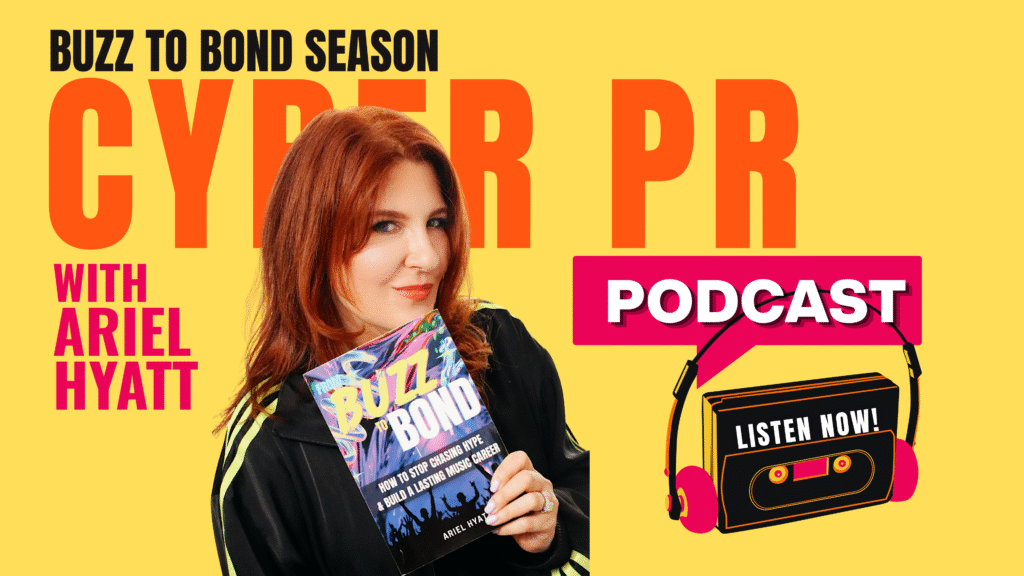
Ready to build your full release strategy? Read Episode 1 of the Cyber PR Music Podcast: The Music Industry Has Been Lying to You About Success
Subscribe for more!
Back to The Blog