
TL;DR Quick Summary
Music industry expert and Cyber PR founder Ariel Hyatt explains how to research and contact music PR companies, weigh music promotion services against your goals and budget, and hire a publicist you can trust.
If you’ve been told you need a publicist but have no idea what that means or what it costs, this guide is for you. Learning how to find a music publicist who actually delivers is one of the most misunderstood decisions in the music business.
I wrote the book on this. Literally. The Ultimate Guide to Music Publicity became an international bestseller, built from over 50 contributions from artists, journalists, blog owners, and the founder of SubmitHub. So when I tell you that hiring a music publicist is one of the most misunderstood decisions in the music business, I’m not guessing. I’ve spent 30 years running Cyber PR Music, spoken with thousands of independent artists, and heard every version of this story. The good, the bad, and the expensive.
Done right, working with a publicist can accelerate your career. Done wrong, it will cost you thousands of dollars and leave you with a folder full of “we reached out to” reports and zero actual results.
Let’s fix that.
Table of Contents
What should I look for when vetting music publicists?
When vetting music publicists, consider budget fit, whether they represent your genre and career level, and how they handle accountability and reporting. Ask hard questions, get specific media-target goals in writing, research each one by Googling them and asking other artists. Judge music promotion services on evidence, not promises.
The Biggest Mistake Musicians Make When Hiring a Publicist
I’ll say it plainly: most artists who get burned by a PR firm get burned because they aimed too high, too fast.
They hire a big national firm (the kind with famous names on their roster), then get absolutely devastated when they don’t land Rolling Stone, Pitchfork, The New York Times, or an NPR Tiny Desk session.
Here’s the thing. Publicity is not like ordering at Burger King. You cannot walk up and say, “Have it your way: give me an extra beef patty and a Pitchfork review.” It does not work that way.
Publicity is earned. It develops as your career develops. It grows as your story grows. Artists on the rosters of big national firms have spent years, sometimes decades, building the story and track record that makes those placements possible. You can’t skip that process by writing a bigger check.
And here’s what the big firms won’t tell you: those national shops are not set up to get a lot of small results. They pitch big, or they don’t pitch. That means if you’re an independent artist without major label support or a viral moment behind you, you won’t get the same treatment as their flagship clients. You’ll get passed off to junior publicists while the owner you were so impressed with on the phone is nowhere to be found.
I had a client who learned this the hard way.
They hired a well-known international PR firm, had a wonderful call with the founder, signed the contract, and then never heard from her again. Every single report was full of “reached out to” with zero actual placements.
At the end of three months at $3,000 a month, plus expenses that included things like the Diet Coke the publicist ordered when she came to see them play at a club, they were told: “So sorry, good luck.”
That was $9,000 plus expenses for absolutely nothing.
When they pushed back, they were told something I hear constantly, and that makes my blood boil every single time:
“You pay for effort, not results.”
I’ve heard this from dozens of clients who came to me after getting burned. In PR, results are never 100% guaranteed. No legitimate publicist can promise you a specific placement in a specific publication. That’s just the nature of earned media.
But here’s what IS true: a good publicist at any investment level should deliver SOMETHING. Real placements. Real coverage. Real movement on your story. “Reached out to” is not a result. It’s a spreadsheet entry.
Don’t let this be you.
The Honest Truth About Publicity Right Now
Here’s something most PR people won’t tell you:
Payola is back. And it never really left.
Many blogs now accept money in exchange for coverage. Some “PR firms” have built their entire business model around paid editorial placement: you pay, they place, and everyone pretends it’s organic press. It’s not illegal. But it’s not what most artists think they’re buying when they hire a publicist.
I dislike this for two reasons.
First, paid placements carry less weight. Google is getting smarter about identifying paid content. Readers are too.
One: A purchased glowing review doesn’t build your story the way earned coverage does, and sophisticated industry people can often smell it.
Second, it means you need to ask the question directly: Is this placement earned or paid? A legitimate publicist will tell you the difference and be clear about which outlets on their list require payment and which don’t. If a firm can’t answer that question cleanly, walk away.
None of this means PR isn’t worth it. It absolutely is because
Your press story builds your narrative. Coverage by journalists and bloggers who chose to write about you creates credibility you cannot manufacture yourself. Social posts are you talking about you. Press is someone else saying you matter. That difference is enormous.
Your press story builds your SEO. Every legitimate placement is a backlink. Every interview is indexed content. Every review that mentions your name, your genre, and your city is another signal that helps Google and AI tools like ChatGPT and Claude. Understand who you are and surface you when someone searches for music like yours.
Today, your press story is also your search story. That’s why real, earned, transparent, story-driven publicity still matters. Just go in with your eyes open.
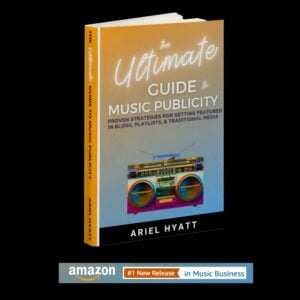
Want to go deeper? The Ultimate Guide to Music Publicity covers everything in this post and then some, with insights from over 50 artists, journalists, blog owners, and music industry insiders, including SubmitHub founder Jason Grishkoff. It became an international bestseller for a reason.
Get your copy directly from me instantly here
Before You Call Anyone: Get Clear on These Three Things
1. Your Budget
Music publicist prices vary wildly — from a few hundred dollars a month for independent publicists to $5,000 or more per month for larger national firms. Most PR firms don’t publish their rates.
A word of warning: many PR firms charge what they think the client can afford. If you walk into a conversation volunteering that you have investors or are “willing to pay top dollar,” some firms will price accordingly. Keep that information to yourself until you have a proposal in hand.
Our Cyber PR campaigns start at approx. $1,000 for a 4-week campaign. We publish this because we believe you deserve to know what you’re getting into before we get on a call.
Ask yourself one question before reaching out to anyone: how much are you actually willing to spend on PR specifically? Not on your whole release, on PR alone. Have that number ready before you pick up the phone.
2. Your Goals: Please Make Them Realistic Ones
Before you contact a publicist, write down at least five specific media targets. Not “Rolling Stone”; actual, realistic targets based on where you are in your career right now.
If you’re a new indie folk artist who has never had press coverage, your list should include music blogs, local publications, and genre-specific outlets. That’s not settling. That’s how you build a press story that eventually gets you to the bigger outlets.
Artists who build the best press careers over time understand that every placement, even a small blog, adds a brick to the foundation. The big outlets are the penthouse. You have to build the building first.
Also, setting goals you can control in your PR world is a great practice.
3. What Makes You Newsworthy Right Now
A publicist pitches your story, not just your music. Before you hire anyone, ask yourself: What is actually interesting about what I’m doing right now?
Do you have a unique angle? A charity affiliation? An unusual backstory? A tour in an unexpected market? A collaboration that raises eyebrows?
If your only news is “I released a song,” that’s a hard pitch. Come to the table with angles. Nobody knows your story better than you do — and a good publicist will help you shape it, but they need raw material to work with
I have a free music publicity checklist that will help you reveal answers!

How to Find a Music Publicist: Research and First Contact
Do Your Homework First
Spend real time on any firm’s website before you reach out. Ask yourself:
- Does this firm represent music in my genre?
- Are the artists on their roster at a similar career stage as me?
- Do I see actual press placements on their site, or just vague promises?
Google the firm name plus words like “reddit” or “forum” to find candid artist experiences. Check Glassdoor for what former employees say about the culture. Reach out directly to artists on their roster on social media and ask what the experience was like. Word of mouth is still the single best way to vet a PR firm.
Making First Contact
Whether you call or email, keep your initial outreach short. You’re opening a door, not pitching the full campaign.
If calling, introduce yourself briefly: your name, your artist name, your genre, and your release timeline. Ask three things only:
- Are you taking new clients for my timeframe?
- Here’s a 3-sentence description of my project; does this sound like a fit?
- Can I send you the music?
Send a private SoundCloud link. Not a Dropbox folder, not an attachment. One click for them, that’s it.
If emailing, same approach. Short, specific, personalized. One client of mine created an individual playlist for each PR firm he contacted. He discovered that several wanted to meet, even though they hadn’t actually listened yet. That level of personalization gets noticed. So create your perfect pitch. LLMs can help with this.
The 3 Strikes Rule
If a firm doesn’t respond within 5 business days, follow up. Do this three times over 15 days. If they still haven’t responded, move on. A firm that can’t return a basic inquiry is showing you exactly how they’ll communicate during your campaign.
When You Get a Publicist on the Phone
This is your audition AND theirs. Pay attention to both sides.
On your side, come prepared with your goals, release timeline, angles, and budget range.
Be honest about where you are in your career. Don’t oversell. The right publicist will appreciate clarity more than hype.
On their side: watch for these red flags.
Red flag 1: They haven’t listened to your music before the call. This is basic respect. If they can’t be bothered before you’re a paying client, imagine what happens after.
Red flag 2: They “yes” you to death without managing expectations. If a publicist tells you exactly what you want to hear on a sales call, run. A good publicist will be honest about what’s realistic for where you are in your career. Comfortable honesty now saves you from devastating disappointment later.
Red flag 3: Hard sell tactics. “This rate is only available until Friday.” This is not a used car lot. Any firm that uses pressure tactics is not the one you want managing your reputation.
Red flag 4: Vague reporting. Ask specifically: who will be pitching me? Will it be you personally or a junior publicist? How often will I get reports? What does a report actually show me? What happens if placements aren’t coming in?
At Cyber PR, every client gets a password-protected dashboard that shows in real time exactly who we are pitching every single day, their social profiles, their feedback, everything. You never have to wonder what’s happening. That level of transparency is rare in this industry, and we built it specifically because of stories like the one I told you above.
The Single Most Important Question to Ask
Before you sign anything, ask this:
“What kind of results do you realistically think you can get for me? What can I actually expect?”
A good publicist will give you a grounded, honest answer based on your music, your story, and your career stage. They’ll talk about realistic outlets, realistic timelines, and realistic outcomes.
A bad publicist will tell you whatever you want to hear.
The answer to this one question will tell you everything.
After the Call: Reviewing a Proposal
A legitimate PR firm will follow up with a written proposal outlining the campaign scope, targets, timeline, and pricing. Take your time reviewing it. Send back questions. Don’t sign under pressure.
Make sure the proposal specifies:
- Who will actually be working on your campaign day-to-day
- How often you’ll receive reports and what they contain
- What is the process if the results are slower than expected
- Clear start and end dates
Frequently Asked Questions About Hiring a Music Publicist
What should I look for when vetting music publicists?
When vetting music publicists, consider budget fit, whether they represent your genre and career level, and how they handle accountability and reporting. Ask hard questions, get specific media-target goals in writing, research each one by Googling them and asking other artists. Judge music promotion services on evidence, not promises.
What does a music publicist actually do?
A publicist pitches your story to journalists, bloggers, and podcast hosts to earn coverage you did not pay for. That means building a pitch around why your music matters right now, targeting the specific writers likely to care, and following through until something lands. It is not a mass email blast. The results are earned rather than bought.
How much does a music publicist cost?
Prices range widely. Independent publicists may charge a few hundred dollars a month. Midsize firms typically run $1,000 to $3,000 per month. Larger national firms charge $5,000 and up. Cyber PR campaigns are priced by scope and release timeline, and you get a written number before you ever sit through a sales call.
Do I need a publicist if I am just starting out?
Not necessarily. Publicity amplifies what already exists. Before spending on PR, make sure you have finished music, a clear brand, an active social presence, and an email list. A publicist cannot build those for you. If that foundation is missing, a custom artist development plan like a Total Tuneup is the smarter first step.
How long does it take to see results from a PR campaign?
A campaign needs four to six weeks to build real momentum, though first placements can land much sooner when a publicist works in digital media and already knows the editors. Early wins are encouraging but the story deepens over time. Be suspicious of anyone guaranteeing specific results on a timeline they do not control.
Can I use SubmitHub instead of hiring a publicist?
SubmitHub is a useful tool and many publicists use it too. But it is easy to burn through credits without meaningful results. A publicist who knows the platform knows which curators are worth pursuing and which to skip, and brings relationships and opportunities that no submission platform can reach. The two are not interchangeable.
Can a publicist get me on Spotify editorial playlists?
No. Editorial playlisting runs through Spotify for Artists and is not influenced by press contacts. Nobody can buy their way in and nobody can guarantee it. If a firm says they can secure editorial placement as part of a PR campaign, they are misleading you. Pitch it yourself, at least four weeks before release day.
Who is Ariel Hyatt?
Ariel Hyatt is the founder of Cyber PR, a music PR and marketing agency for independent artists, and the author of seven books on music marketing and publicity, including The Ultimate Guide to Music Publicity and From Buzz to Bond: How to Stop Chasing Hype and Build a Lasting Music Career. She teaches artists to build a Fan Sanctuary, an owned audience, rather than chase followers. Her books are at
https://cyberprmusic.com/music-marketing-and-pr-books/
Ready to Talk About a PR Campaign?
If you’ve read this far, you’re doing the research the right way. That already tells me something good about you.
At Cyber PR Music, we’ve spent 30 years building relationships with music journalists, bloggers, and podcast hosts who trust us because we never blast generic pitches.
We pitch selectively, personally, and with complete transparency — you’ll see every single pitch in real time through your own private dashboard.
If you are interested in working with us on a music publicity campaign, we want to understand your music, your goals, and where you are in your career.
Tell us about your project and let’s see if we’re a fit →

Subscribe for more!



Back to The Blog